ESG is not a responsibility, but an opportunity – Thoughts from the ESG Summit 2025
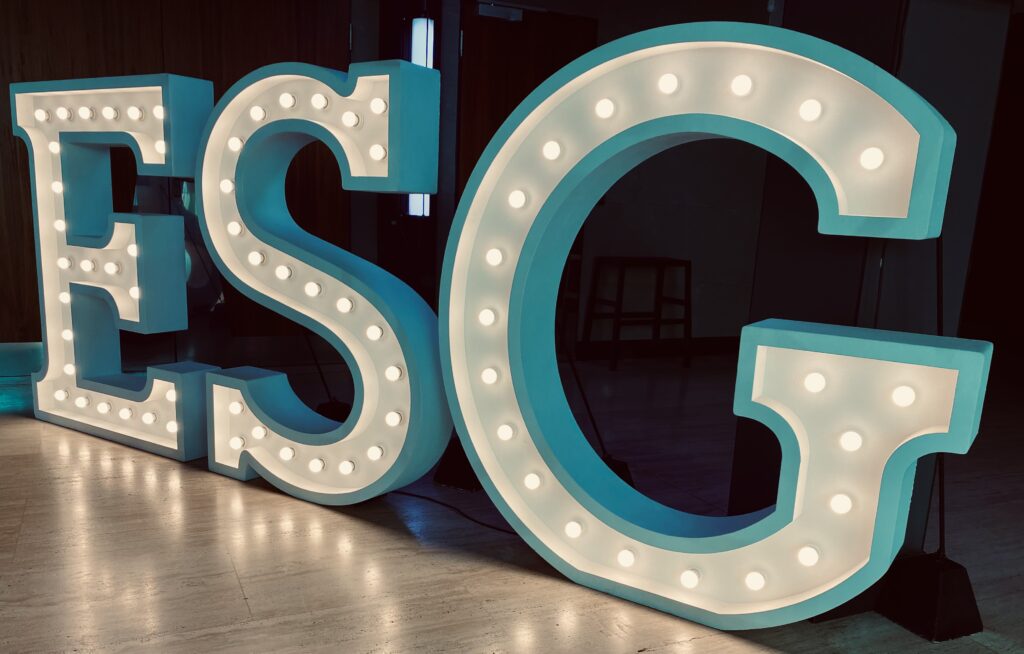
Last week, I had the opportunity to attend the ESG Summit 2025, organized with the support of Mastercard, E.ON, and several other partners. The conference explored a wide range of topics around ESG (Environmental, Social, and Governance), reinforcing my belief that these issues are not only timely but increasingly of strategic importance for every responsible business.
Let’s push boundaries – starting with design
The ESG framework is not merely a compliance requirement. It encourages us to rethink the business, economic, ethical, and social structures that shape how our world operates. For me, one of the most exciting questions is how we can integrate ESG considerations into corporate operations at the level of product and service development, or even the business model itself.
Most presentations focused on reporting, and understandably so, as this is one of the most frequently cited and most tightly regulated aspects of ESG. However, I believe the future begins not only when we measure and report impact, but when we incorporate ESG thinking into the design phase itself.
Examples that inspire
It was refreshing to hear the panel discussion with Bence Blaumann (Rejoy) and Albert Wettstein (Munch). They’re addressing important social challenges with business models that remain economically sound. They proved that ESG isn’t just about compliance – it’s about creating value.
The responsibility of design
We can also learn from mistakes others have made. A good example is WHOOP – an excellent product, whose latest version underwent a complete redesign, rendering previous-generation straps and chargers unusable. It’s hard to imagine this wasn’t foreseeable at the design level.
Decisions like this – even if not made in bad faith – undermine sustainability and can ultimately damage brand credibility over the long term.
ESG as a strategic filter
While many still view ESG through the lens of compliance, its greatest potential is realized when it becomes an integral part of strategic thinking. I truly believe more and more organizations will come to recognize: ESG is not an added cost or obligation – it’s an opportunity to create better products, services, and business models, generating real value for the long run.