Touchpoints – Where Does the Customer Encounter Us, and Why Does It Matter So Much?
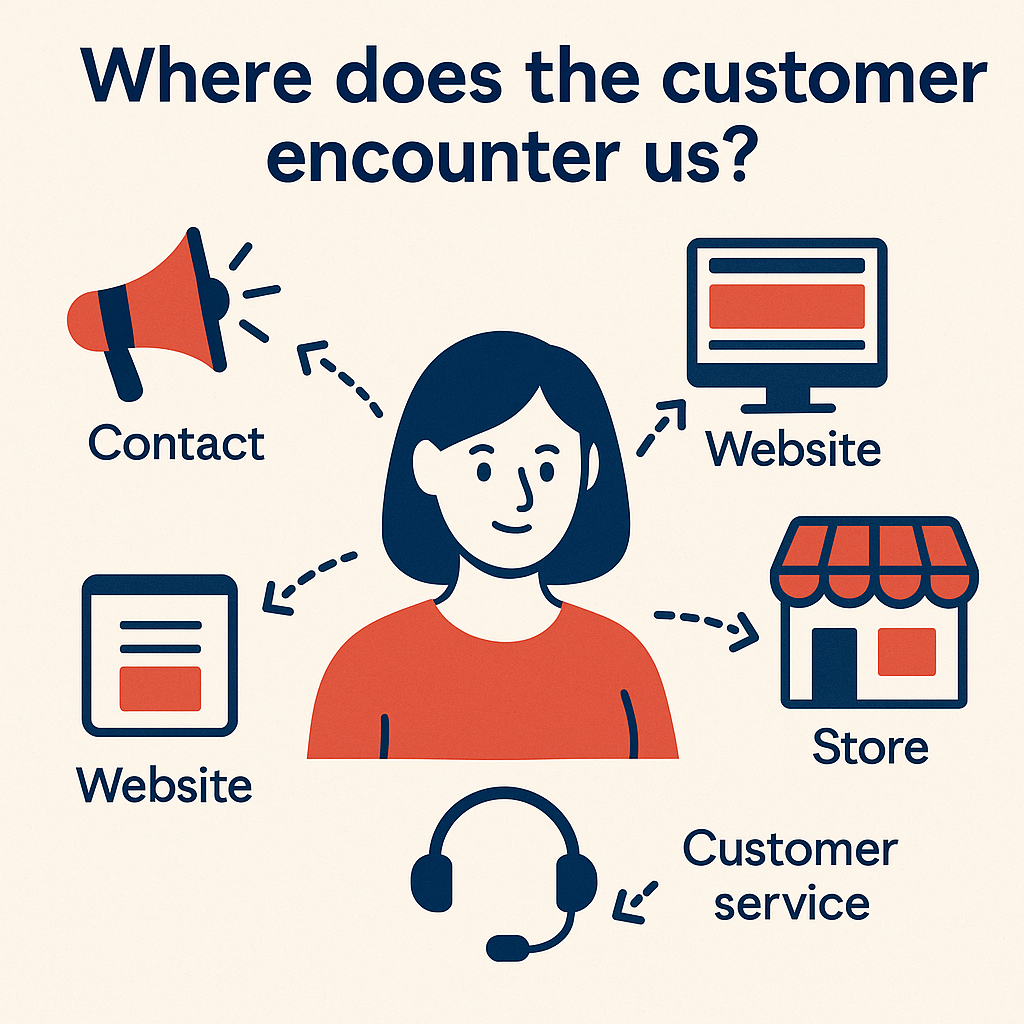
In our previous article about the customer journey, we mentioned the term touchpoint — one of the fundamental building blocks when mapping customer interactions. Let’s now dive deeper and explore what these elements are and how they should be interpreted.
Purchasing is rarely the result of a single step. Rather, it’s built upon a series of interactions, impressions, experiences, and moments of contact. These are what we call touchpoints — the specific points where the customer meets your brand.
These touchpoints exist whether or not you actively manage them. And if you’re unaware of them, it’s like navigating in the dark — you might reach your customer, but not where or how you should.
What is a touchpoint?
A touchpoint is any instance — active or passive — where a customer comes into contact with your brand. These can be online or offline interactions, and each one influences the customer experience and their perception of your business, sometimes instantly, other times down the line.
Importantly, not all touchpoints are equal: some are critical and can directly influence whether a customer decides to buy or leave. Others, while less decisive, add value and emotion to the overall experience, often turning buyers into loyal advocates, whether they’re private consumers or business partners.
Typical Examples of Customer Touchpoints
1. Website – your company’s online presence
The first impression often happens here. A clear, mobile-friendly site is already a positive experience. But if the structure is confusing, the functions broken, or the content unclear, potential customers may be discouraged before they ever make a purchase, and you might never even know. You’ll only see it in your web analytics: traffic arrives, but conversions don’t happen.
2. Advertisements / Social Media
Even seeing an ad is a touchpoint. The tone, design, and messaging all shape the customer’s early impression. This proves that the customer journey begins well before the purchase or any formal interaction with your system.
3. Physical store or shop window
The environment, the attitude of employees, even how clean the shelves are — all of these influence perception. Even in a premium telecom store with a polished design, dusty shelves can send a message of carelessness. If a company treats its space like this, how does it treat its customers?
4. Customer service / Call center
This is where problem-handling comes into play. A helpful support agent can turn a frustrated customer into a loyal one. But if handled poorly, the relationship — already fragile — can break completely.
5. Billing, confirmations, and delivery
Often labeled as “technical details,” these are critical experiences from the customer’s perspective. Who hasn’t received a utility bill or bank statement they didn’t understand? The problem? For the company, unnecessary phone calls and service tickets. For the customer, more stress was added to their daily life.
6. Using the product or service
Yes, this too is a touchpoint! From the moment someone unpacks and uses the product, the experience unfolds. Design matters — not just how the product looks, but how intuitive it is to use (ergonomics, usability). This also applies to services — and is the essence of service design, which we’ll explore in a future article.
Why is it important to map these points?
- Because the customer journey is invisible if you don’t know your touchpoints
- Because loyalty and perception are built around these interactions
- Because when managed intentionally, they strengthen trust and increase customer return rates
What can you do now?
✅ Make a list of all possible touchpoints and arrange them to visualize the customer journey
✅ Try them yourself — act like a “mystery shopper”
✅ Identify critical touchpoints and make sure nothing goes wrong there
✅ Ask your customers where they had their best and worst experiences
✅ Create “moment-of-truth” touchpoints that evoke emotion and tie customers to your brand
👉 In the next article, we’ll explore the role of emotion in the customer experience (CX).